Coding Standard for PHP
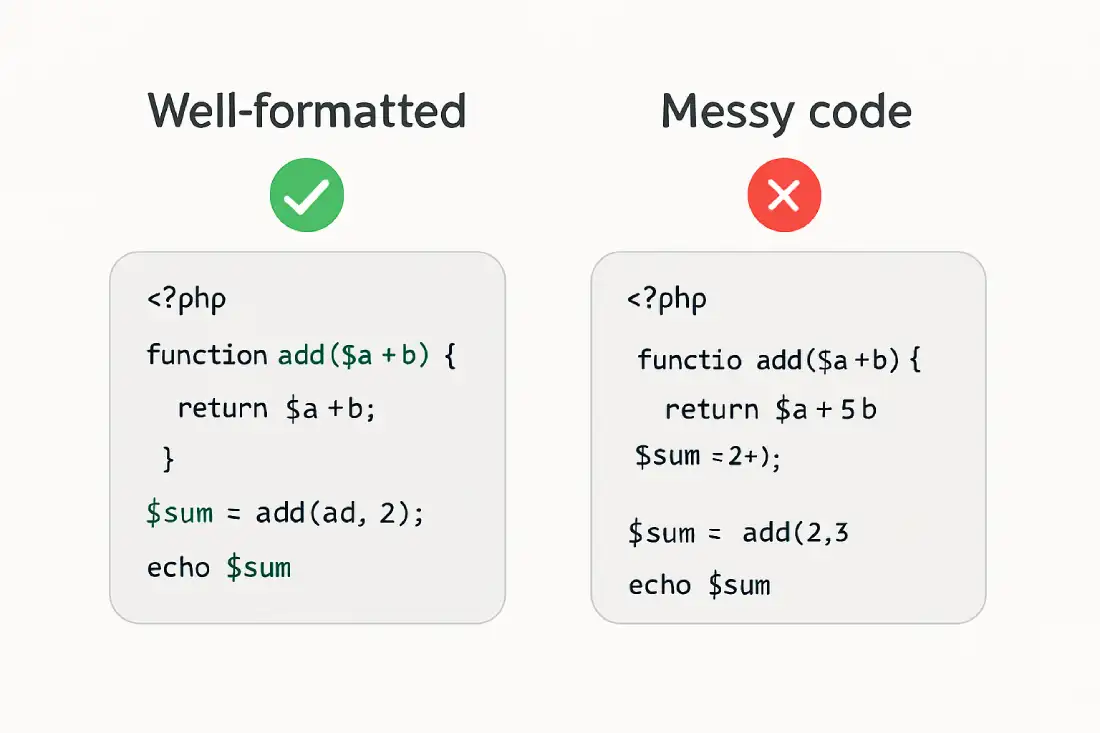
📌 Key Takeaways
- Coding Standard for PHP
- 11 Powerful PHP Coding Standards to Write Clean and Professional Code
- What Are Coding Standards in PHP Programming
- Why PHP Coding Standards Are Important for Professional Development
- PHP File Structure and Formatting Coding Standards
- PHP Naming Conventions for Variables Functions and Classes
Table of Contents:
11 Powerful PHP Coding Standards to Write Clean and Professional Code
Following proper PHP coding standards is essential for writing clean, readable, secure, and maintainable code. Whether you are a beginner or an experienced developer, coding standards help you work faster, avoid errors, and collaborate effectively.
This complete guide explains PHP Coding Standards with clear rules, real examples, outputs, FAQs, and best practices.
What Are Coding Standards in PHP Programming
PHP coding standards are a set of rules and conventions that define how PHP code should be written and formatted.
They focus on:
- Code readability
- Consistency
- Maintainability
- Security
- Team collaboration
Coding standards do not change how code works, but greatly improve how code looks and performs long-term.
Why PHP Coding Standards Are Important for Professional Development
Using proper coding standards provides many long-term benefits.
Key Advantages of PHP Coding Standards
- Makes code easy to read and understand
- Reduces bugs and logical errors
- Improves collaboration in teams
- Simplifies debugging and maintenance
- Enhances application security
Professional PHP projects always follow strict coding standards.
PHP File Structure and Formatting Coding Standards
PHP Opening and Closing Tags
Best practice is to use only the opening PHP tag.
Example:
<?php
echo "Hello PHP";
Output
Hello PHP
Avoid closing PHP tags in pure PHP files to prevent unwanted whitespace issues.
PHP Naming Conventions for Variables Functions and Classes
Variable Naming Standard in PHP
- Use meaningful names
- Use camelCase for variables
Example:
$userName = "Amit";
echo $userName;
Output
Amit
Function Naming Standard in PHP
- Use camelCase
- Use action-based names
Example:
function getUserName() {
    return "PHP Online";
}

echo getUserName();
Output
PHP Online
Class Naming Standard in PHP
- Use PascalCase
- Class name should match file name
Example:
class UserProfile {
    public function show() {
        return "User Profile Loaded";
    }
}

$obj = new UserProfile();
echo $obj->show();
Output
User Profile Loaded
PHP Indentation and Code Formatting Best Practices
Proper indentation improves readability.
Indentation Rules
- Use 4 spaces for indentation
- Avoid tabs
- Keep consistent formatting
Example:
if (true) {
    echo "Coding Standards Matter";
}
Output
Coding Standards Matter
PHP Commenting Standards for Clean Code
Comments should explain why, not what.
Single-Line Comment Example
// Display welcome message
echo "Welcome to PHP Online";
Output
Welcome to PHP Online
Multi-Line Comment Example
/*
 This function returns
 the website name
*/
function siteName() {
    return "phponline.in";
}

echo siteName();
Output
phponline.in
PHP Coding Standards for Control Structures
If Else Coding Standard
- Use braces even for single lines
- Keep conditions readable
Example:
$age = 20;

if ($age >= 18) {
    echo "Eligible to vote";
}
Output
Eligible to vote
PHP Coding Standards for Security Best Practices
Security is a critical part of coding standards.
Key Secure Coding Rules
- Always validate user input
- Escape output properly
- Avoid using deprecated functions
- Use prepared statements for databases
Example:
$name = htmlspecialchars("<script>");
echo $name;
Output
<script>
PHP PSR Standards Explained Simply
PHP-FIG defines PSR (PHP Standards Recommendations).
Common PSR Standards
- PSR-1: Basic coding standard
- PSR-4: Autoloading classes
- PSR-12: Extended coding style guide
Following PSR standards ensures industry-level PHP code quality.
Real World Benefits of Following PHP Coding Standards
Practical Use Cases
- Team-based development
- Large PHP applications
- Framework development
- Enterprise-level projects
- Open-source contributions
Coding standards help your code stay future-proof.
Best Practices for Maintaining PHP Coding Standards
Follow these professional tips:
- Use meaningful names everywhere
- Keep functions small and focused
- Follow PSR-12 formatting rules
- Review code regularly
- Use automated code linters
Common Mistakes Developers Make with PHP Coding Standards
Avoid These Errors
- Inconsistent naming styles
- Mixing tabs and spaces
- Writing long unreadable functions
- Ignoring comments
- Skipping input validation
Frequently Asked Questions About PHP Coding Standards
What is the best PHP coding standard
PSR-12 is the most widely accepted modern PHP coding standard.
Are PHP coding standards mandatory
Not mandatory, but essential for professional development.
Do coding standards affect performance
They mainly improve readability and maintenance, not execution speed.
Should beginners follow coding standards
Yes, learning standards early builds strong habits.
Can coding standards improve security
Yes, secure coding standards reduce vulnerabilities.
Final Conclusion on Coding Standard for PHP
PHP coding standards are the foundation of clean, secure, and professional PHP development. They help developers write better code, collaborate easily, and maintain applications efficiently.
By following the standards explained in this guide, you can write high-quality PHP code that meets industry expectations and grows with your career.